When planning a kitchen makeover, many homeowners look for practical ways to refresh the heart of their home without committing to a full renovation. Modern design solutions have made it possible to achieve a stylish transformation while avoiding the expense, disruption, and lengthy timelines often associated with replacing cabinetry.
One option that continues to gain popularity is kitchen wrapping, offering an affordable way to update cabinet doors, drawers, and visible surfaces with high-quality vinyl finishes. Available in a wide range of colours, textures, and contemporary styles, this approach can dramatically improve the appearance of an existing kitchen.
Before making a decision, it is important to understand how the process works, what benefits it offers, its limitations, and whether it is the right choice for your home. Knowing what to expect helps you make an informed investment that delivers long-lasting value.
What Is a Kitchen Wrap?
A kitchen wrap is a specialist vinyl film that is carefully applied to suitable cabinet doors, drawer fronts, kickboards, panels, and other smooth surfaces. Rather than replacing existing cabinetry, the visible exterior is covered with a durable decorative finish.
Modern architectural vinyl has evolved considerably over the years. Premium products are designed to withstand daily household use while replicating the appearance of painted timber, natural wood grains, concrete, stone, matte colours, gloss finishes, and textured surfaces.
Because the existing cabinet structure remains in place, the transformation focuses on aesthetics rather than structural changes. If the cupboards are still solid, wrapping can provide a fresh, updated appearance without unnecessary waste.
Why Homeowners Choose This Renovation Option
Many households prefer this approach because it offers a balance between affordability and visual impact. Instead of demolishing an entire kitchen, only the external appearance changes.
Some of the biggest advantages include:
- Lower overall renovation costs compared with full cabinet replacement.
- Faster installation with minimal disruption.
- A wide variety of colours and finishes.
- Reduced building waste.
- Existing layouts remain unchanged.
- Suitable for many modern and traditional kitchen styles.
For families wanting to modernise their living space without weeks of construction work, this solution often provides excellent value.
Is Your Kitchen Suitable?
Not every kitchen is an ideal candidate. The condition of the existing cupboards plays a significant role in determining whether wrapping will achieve a quality result.
Cabinets should be structurally sound, firmly installed, and free from severe water damage. Minor cosmetic imperfections can often be addressed during preparation, but major defects may require repairs or replacement first.
Professional installers carefully inspect surfaces before beginning work. They check for peeling laminate, moisture damage, loose edging, warped panels, and other issues that could affect adhesion over time.
When the underlying cabinetry remains in good condition, the finished result can look remarkably similar to newly installed cupboards.
Understanding the Installation Process
Preparation is one of the most important parts of any successful installation. Every surface must be thoroughly cleaned to remove grease, dust, cooking residue, and contaminants that could interfere with adhesion.
Cabinet doors are often removed to allow precise application. The vinyl is measured, cut, heated, stretched where necessary, and carefully wrapped around edges to create a seamless appearance.
Professional installers use specialised tools that minimise bubbles, wrinkles, and lifting around corners. After installation, the material continues bonding to the surface as the adhesive fully cures.
The overall timeframe depends on the kitchen's size and complexity, but many projects can be completed much faster than traditional renovations.
Available Colours and Finishes
Today's vinyl finishes offer far more than simple solid colours. Homeowners can create almost any aesthetic, from sleek contemporary spaces to warm, natural interiors.
Popular options include:
- Matte neutral tones.
- High-gloss modern colours.
- Realistic woodgrain textures.
- Marble-inspired finishes.
- Concrete-effect surfaces.
- Metallic accents.
- Soft-touch premium textures.
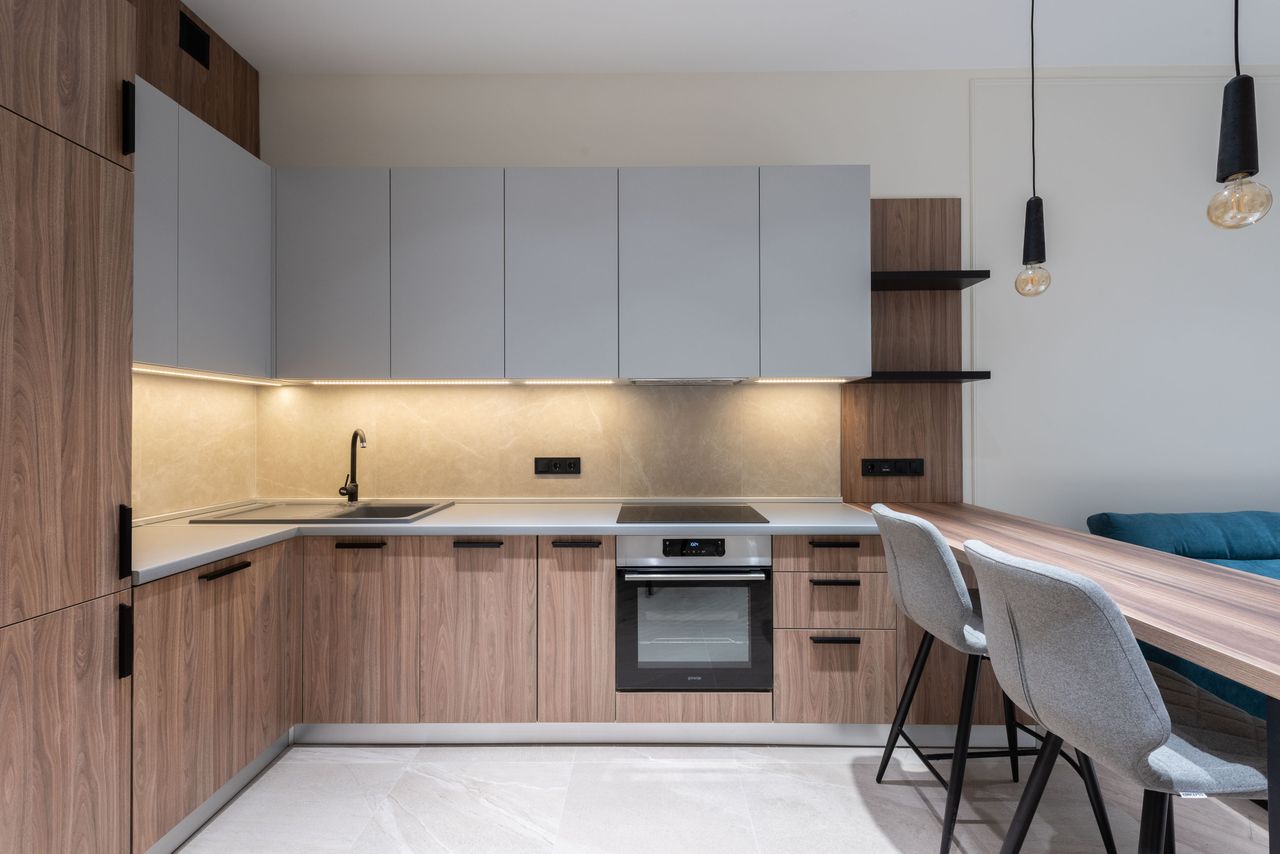
Mixing complementary finishes can also create visual interest. For example, woodgrain lower cabinets paired with matte upper cupboards can produce a sophisticated and timeless design.
Durability and Everyday Performance
One of the most common questions involves longevity. Quality materials installed correctly are designed to handle normal household use, including frequent opening and closing of cupboards.
However, durability depends on several factors, including installation quality, product grade, exposure to heat, cleaning methods, and everyday wear.
Direct contact with excessive heat should always be avoided. Areas near ovens, stovetops, or other high-temperature appliances require careful attention during installation to ensure suitable protection.
Sharp objects, aggressive scrubbing pads, and harsh chemical cleaners can also shorten the lifespan of the finish.
With appropriate care, wrapped surfaces can remain attractive for many years.
How to Care for Wrapped Cabinets
Maintenance is refreshingly straightforward. Gentle routine cleaning helps preserve both appearance and adhesion.
Most surfaces only require a soft cloth, warm water, and mild detergent to remove fingerprints, grease, and everyday dirt.
Avoid abrasive products that may scratch the protective surface. Strong solvents and highly acidic cleaners should also be avoided unless specifically recommended by the installer.
Promptly wiping away cooking splashes, steam condensation, and spills helps maintain a fresh appearance while protecting the finish over time.
Common Misconceptions
Some homeowners assume wrapped cabinets look artificial or inexpensive. In reality, premium materials have become remarkably realistic, closely resembling painted cabinetry, timber veneers, and other luxury finishes.
Another misconception is that wrapping can fix structural problems. While it dramatically improves appearance, it cannot repair damaged cabinet frames, water-affected boards, or poorly built units.
There is also a belief that every kitchen can be wrapped. Curved edges, damaged surfaces, unsuitable materials, or complex designs may present challenges that require alternative renovation solutions.
Understanding these limitations helps set realistic expectations before work begins.
Choosing the Right Installer
The quality of workmanship has a significant influence on the final outcome. Even premium materials cannot compensate for poor preparation or rushed installation.
Before hiring a professional, it is worth considering several factors:
- Experience with residential kitchen projects.
- Examples of previous completed work.
- Clear explanations of preparation methods.
- Product warranties where applicable.
- Transparent pricing without hidden costs.
- Good customer feedback and communication.
Taking time to evaluate installers carefully can help avoid costly disappointments and improve long-term satisfaction.
Is It Worth the Investment?
For many households, kitchen wrapping offers an excellent balance between cost, appearance, and convenience. Instead of replacing functional cabinetry, homeowners can achieve a refreshed look while keeping renovation expenses under control.
The decision ultimately depends on the condition of the existing kitchen, personal design goals, and available budget. If cupboards remain structurally sound and only their appearance feels dated, wrapping may provide exactly the transformation needed.
Careful planning, realistic expectations, quality materials, and experienced installation all contribute to a successful result. When these elements come together, a refreshed kitchen can feel brighter, more modern, and significantly more enjoyable to use for years to come.